Abolition of The "Code Noir" Laws. The begining of Conscious Awarness, Intergenerational Trauma Healing to Restoring Humanity.
Author: Lynda Chebbihi
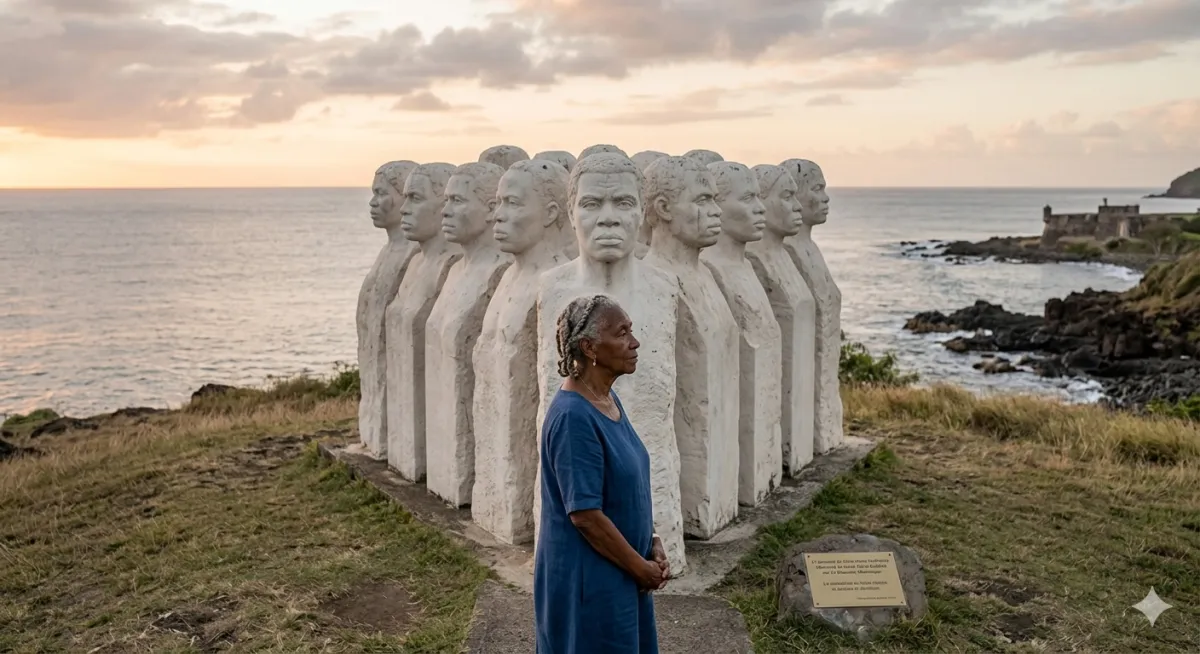
Photo: An AI-generated of a quiet memorial space linked to abolition memory. A Caribbean woman standing and looking forward in a reflective stance.
Today, 28th May 2026, France has officially repealed the Code Noir, nearly 180 years after abolishing slavery. The Code Nore was more than a legal text. It was a system that stripped generations of Black people of their humanity, freedom, and dignity. This moment matters not only in France, but also for collective memory around the world.
Slavery and racism did not end with abolition. Their psychological and social impacts continue across generations. Trauma does not disappear in silence; it is often passed on through fear, shame, hypervigilance, emotional withdrawal, and fractured identity.
Intergenerational trauma shapes how people experience safety, belonging, trust, authority, and self-worth. These patterns often operate outside conscious awareness as survival responses. They affect families, communities, institutions and societies, including the power dynamics between mental health professionals and their clients.
Naming racism and historical violence matters. Silence protects systems that deny pain and minimise lived experience. Honest acknowledgement supports collective healing, emotional integration and the reshaping of shared narratives.
Research in trauma and interpersonal neurobiology shows that unresolved trauma affects the nervous system, relationships, and physical health across generations. Breaking silence create space for reflection, accountability, and repair.
We cannot change the past, but we can change how we face it. By recognising its impact with honesty, justice and humanity, we can begin collective healing from intergenerational trauma, and build relationships and systems grounded in dignity, safety and respect.
Trust your process.